Designing with Rhythm: The Music Elements Canva Frame Template
There’s a particular frustration that hits when you find the perfect photo for a project but it just doesn’t fit the vibe. You have a great image of a cityscape, a portrait, or a product shot, but dropping it into a standard square or circle feels flat and uninspired. If your brand or creative project deals with audio, podcasts, music promotion, or even just a general "beat" or lifestyle aesthetic, standard geometry often fails to convey the energy you need. This is where the Music Elements Canva Frame Template steps in to bridge the gap between a standard image and a dynamic piece of design.
Unlike static assets like a standard PNG or SVG file, this specific resource offers a different kind of utility. You will receive a PDF file containing a link to a custom-made Canva frame template. This isn't just a static image you layer on top; it is an editable Canva template designed to integrate directly into your workflow. The distinction matters. When you are working in a fast-paced environment—whether you are a social media manager scheduling posts for a band, a podcaster creating audiograms, or a small business owner promoting a sale—the ability to simply drag and drop an image into a pre-designed frame saves time and guarantees a professional result. The template is built with a transparent layer, which makes it incredibly versatile for digital use as well as physical products like vinyl stickers or sublimation prints.
Understanding the Aesthetic and Versatility
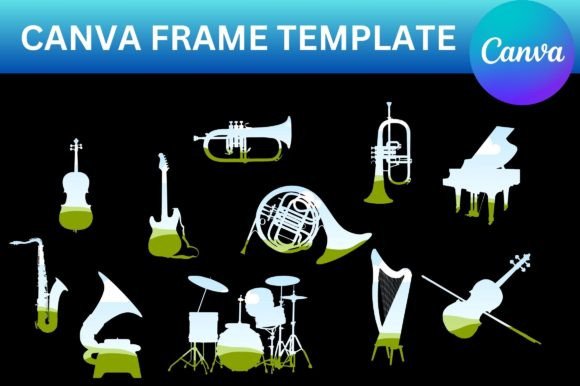
So, what exactly does the Music Elements Canva Frame Template look like? While the specific "music elements" can range from abstract sound waves and vinyl grooves to microphone silhouettes and piano keys, the underlying style usually leans into a modern, slightly edgy aesthetic. It’s designed to break the rules of traditional layout. Instead of hard, rigid borders, you often get organic curves or textured overlays that suggest movement and sound. This gives the design a personality that feels alive and energetic, making it an excellent choice for brand identity work in the entertainment industry.
The practical applications for this kind of asset are surprisingly broad. For the content creator or blogger, this template solves the problem of creating cohesive Instagram grids or Pinterest pins. Imagine a series of concert reviews or playlist recommendations; using the Music Elements Canva Frame Template ensures that every post looks like part of a curated series rather than a random assortment of images. For marketers and entrepreneurs, particularly those in event planning or audio equipment sales, the frame adds an immediate thematic cue. It tells the viewer "this is about music or audio" before they even read the headline.
It also shines in print-on-demand scenarios. Because the file is designed with a transparent layer and is editable, you can size it up or down to suit your needs without losing quality for the intended output. If you are creating merchandise for a local band or designing stickers for an Etsy shop, the drag-and-drop nature of the Canva interface allows you to mock up designs in minutes. It bridges the gap between digital design and physical production seamlessly.
Elevating Visual Hierarchy and Engagement
One of the most overlooked aspects of using a specialized frame template is how it influences visual hierarchy. In design terms, hierarchy is what guides the viewer's eye from the most important element to the least important. A standard rectangular image sits passively on a page. However, a frame with musical elements—perhaps a stylized treble clef wrapping around the corner or a waveform cutting across the bottom—creates a focal point. It adds depth to the composition.
This depth is crucial for audience engagement. When a user is scrolling through a feed, they are bombarded with flat, predictable layouts. A unique frame texture or shape disrupts that pattern. It signals that the content inside the frame is different and worth investigating. For designers working on editorial design or magazine layouts, using such a frame for a feature story on an artist or a cultural trend can break the monotony of text-heavy pages. It provides a visual "breather" that feels thematic rather than arbitrary.
Furthermore, consistency in design builds trust. If you are a small business owner running a music school or a record store, using the same frame style across your social media graphics, website banners, and flyers creates a recognizable pattern. Over time, your audience learns to associate that specific visual style with your brand. The Music Elements Canva Frame Template acts as a design asset that anchors your visual language, ensuring that your brand perception remains professional and intentional.
Practical Application and Workflow Integration
When you sit down to work with this asset, the process is designed to be frictionless. Upon receiving the PDF and accessing the link, you are taken directly into the Canva editor. The template functions as a smart object of sorts. You don't need to be a Photoshop wizard to use it. The "drag and drop" functionality is literal; you upload your photo, drag it over the frame, and it snaps into place within the transparent boundaries.
Here are a few practical tips for getting the most out of this creative font and frame combination:
- Consider the Background: Because the frame has a transparent layer, the background of your canvas matters. If the frame elements are dark, use a light background to make them pop, or vice versa. This ensures the "music elements" are visible and don't get lost in the noise.
- Size Adaptability: The prompt notes that sizes are approximate and can be sized up or down. This is vital for web design vs. print. For a small web icon, you might shrink it down, but for a poster or a sublimation t-shirt, you can scale it up significantly. Just keep an eye on the aspect ratio of your photo inside the frame so it doesn't look stretched or squashed.
- Layering for Depth: Don't be afraid to layer text or other graphics over or under the frame. Since you are working in Canva, you can adjust the layer order. Placing a semi-transparent overlay between the frame and your background image can help text pop while keeping the music elements visible.
For those involved in packaging design, specifically for media or lifestyle products, this template offers a quick way to visualize concepts. Instead of commissioning custom illustration for every single SKU, you can use the frame to create variations. A "Summer Hits" playlist cover might use the frame with a beach photo, while a "Late Night Jazz" cover uses the same frame with a moody city skyline. The unifying element is the frame, maintaining a cohesive product line look.
The Professional Polish
Ultimately, the goal of any design tool is to make you look good. The difference between amateur content and professional content often lies in the details—the edges, the alignment, and the thematic consistency. A generic crop tool does its job, but it offers no creative flair. The Music Elements Canva Frame Template offers that flair on a silver platter.
It removes the guesswork from composition. You don't have to wonder if the guitar illustration you pasted in looks "janky" or if the sound wave vector aligns with the image. The template has done the heavy lifting. It provides a polished, modern typography adjacent aesthetic that respects the principles of good design while allowing for total customization. Whether you are a hobbyist making a cover for your personal Spotify playlist or a graphic designer pitching a concept to a record label, this asset provides a professional foundation that you can build upon. It’s a practical, efficient, and stylistically sound solution for anyone looking to add a musical beat to their visual communications.